How to Terraform Canada
(ethically)

Last week, I presented the Canadian Frontier Thesis:
If we can terraform planets, we can put a couple more folks in Nunavut.
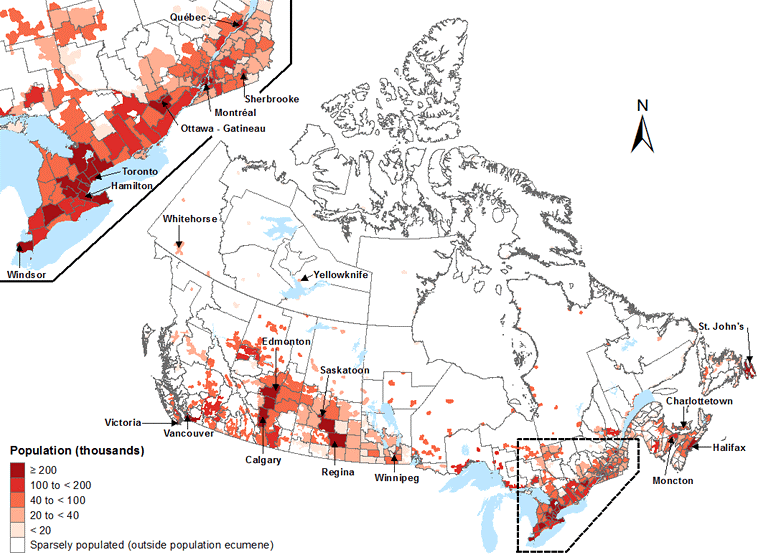
This week, I go into the details of why we would consider this at all, and what would need to happen for this to be feasible.
Why care at all? To derisk the lives of 100,000 Indigenous Canadians who live on this land from climate change, and unlock the fullest potential of the Canadian Shield to increase human prosperity.
First off, quick facts about Canada:
We produce 78% of the world’s maple syrup
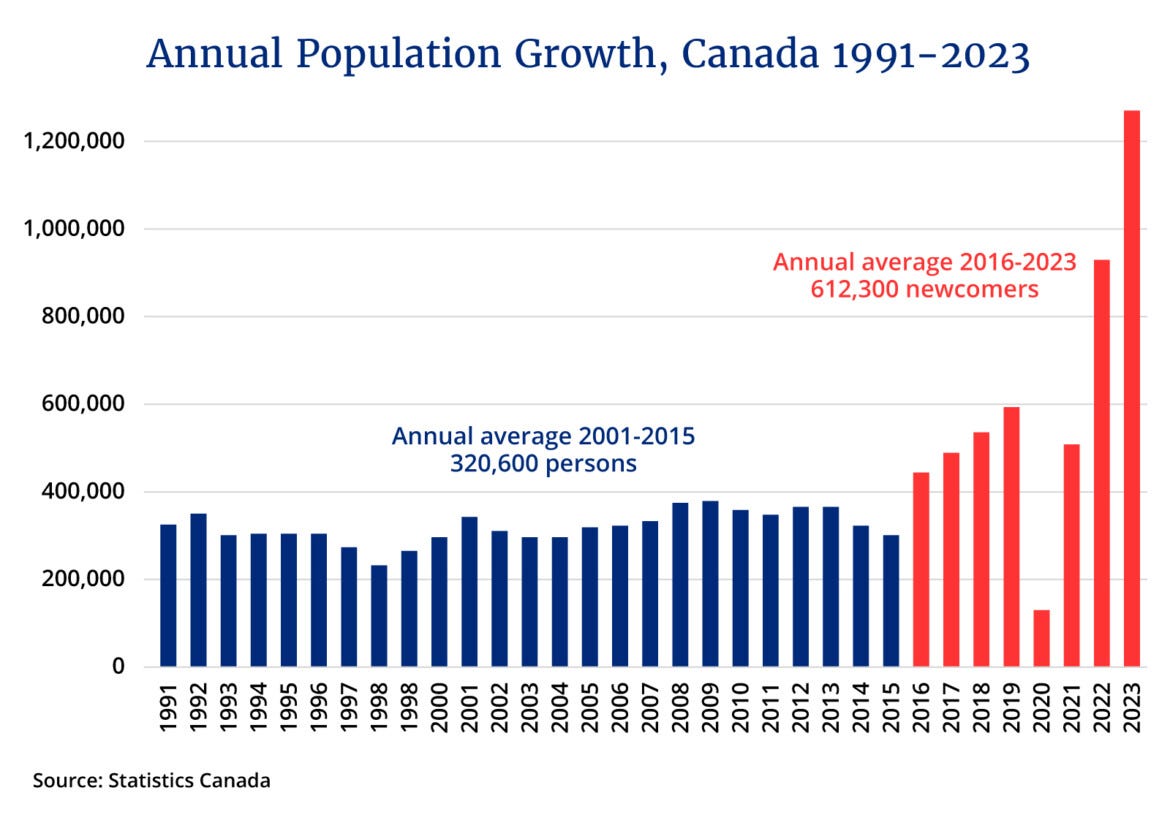
Canada has had ~600,000 new immigrants in the 2016-2023 (Trudeau) window
This has led to an obscene rise in housing prices in Southern Ontario (Greater Toronto Area, Waterloo, Hamilton) and British Columbia (Greater Vancouver Area)
Canola oil is a cultivar of rapeseed soil developed at the University of Manitoba; its name being a portmanteau of ‘can-’ (the country) and ‘ola’ (oil).
On paper, Canada is the 2nd largest country in the world. In practice, Canada Proper is a narrow strip along the southern tip. The expansion into the Canadian Frontier will assert Canada’s presence on the global stage.
Expansion into the frontier will not only address the rising influx of immigrants, it’ll also create thousands of jobs for Canadian families.
Let’s start by looking at why the Canadian North — by which I mean Nunavut, Northwest Territories, Yukon, and northern portions of Ontario and Quebec — is so sparsely populated to begin with.
Geography
The Canadian Shield isn’t the most hospitable location.
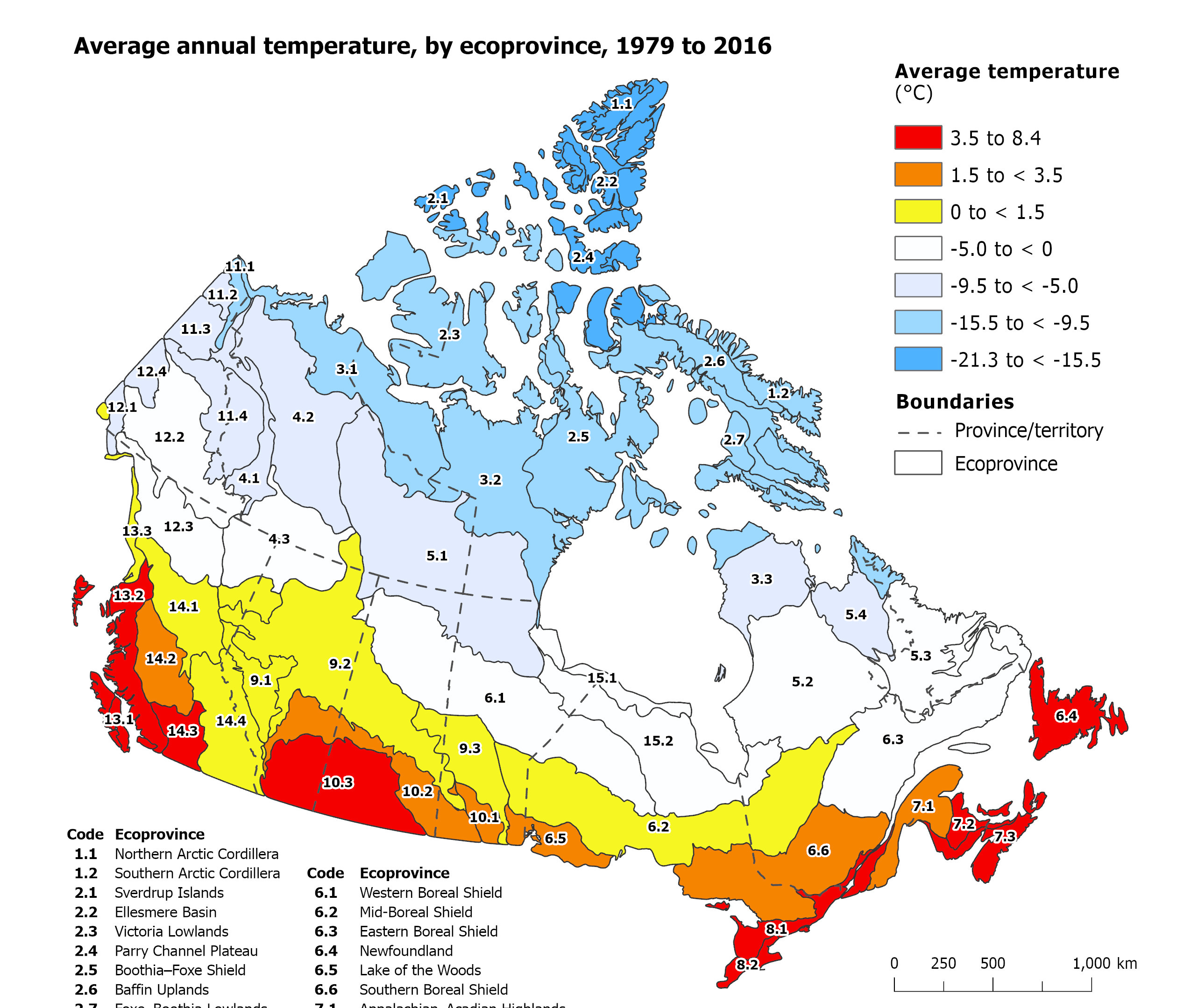
Climate. It’s cold. We’re looking at a region with average temperatures that are -15 celsius (5 Fahrenheit for my American cousins).
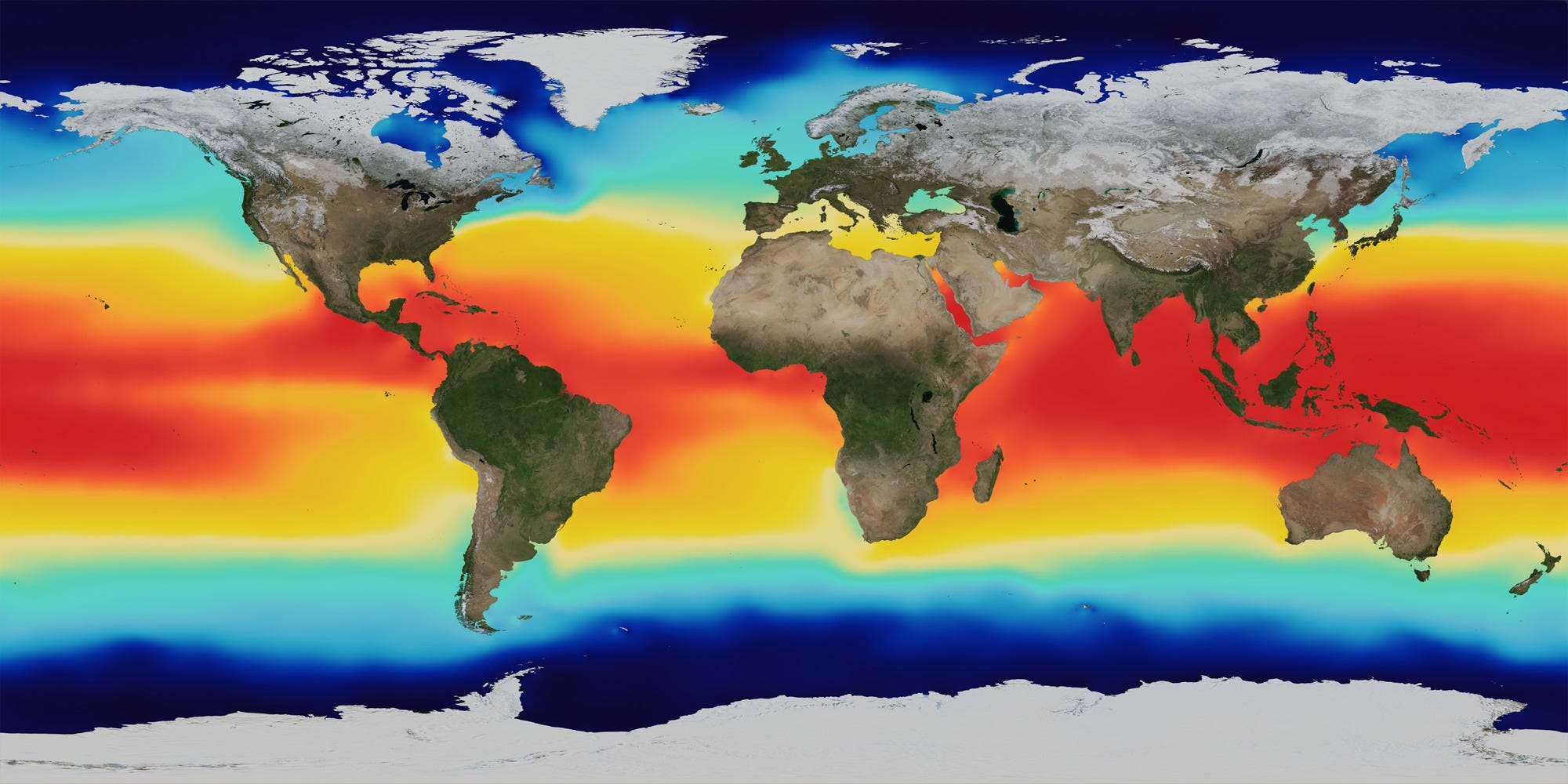
Northernwestern Europe, which is at a similar latitude, has warmer ocean currents.
Alaska is also cold, but has better soil.
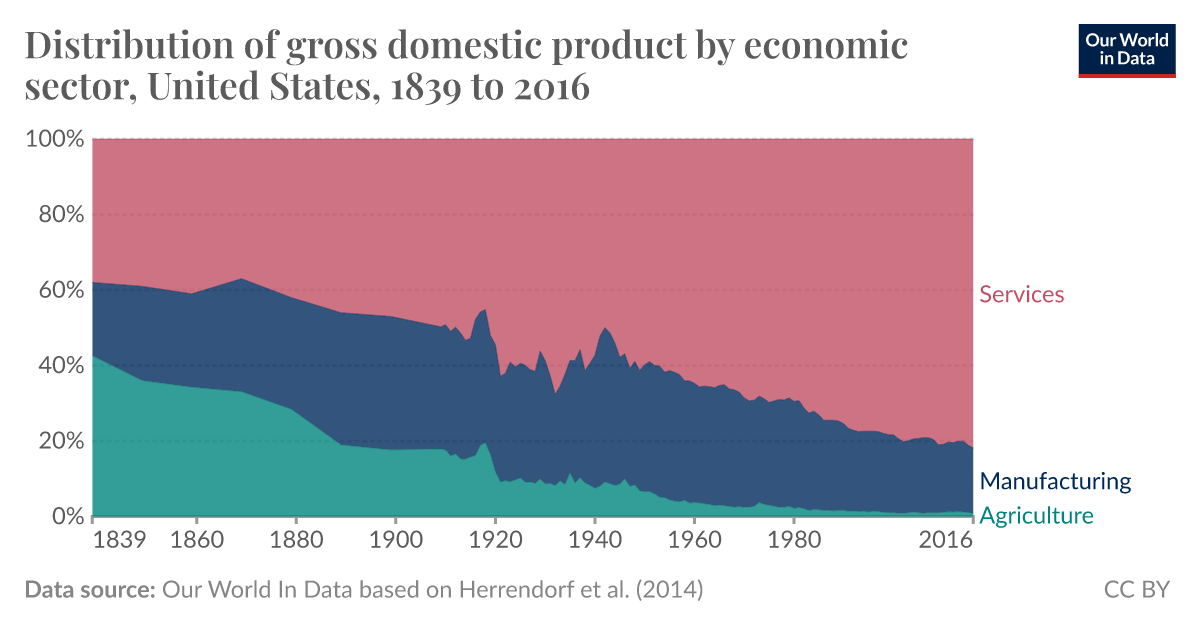
Soil turns out to be kind of important. Agriculture has been post hunter-gatherer humanity’s main economic driver until at least the Industrial Revolution in the 19th century.
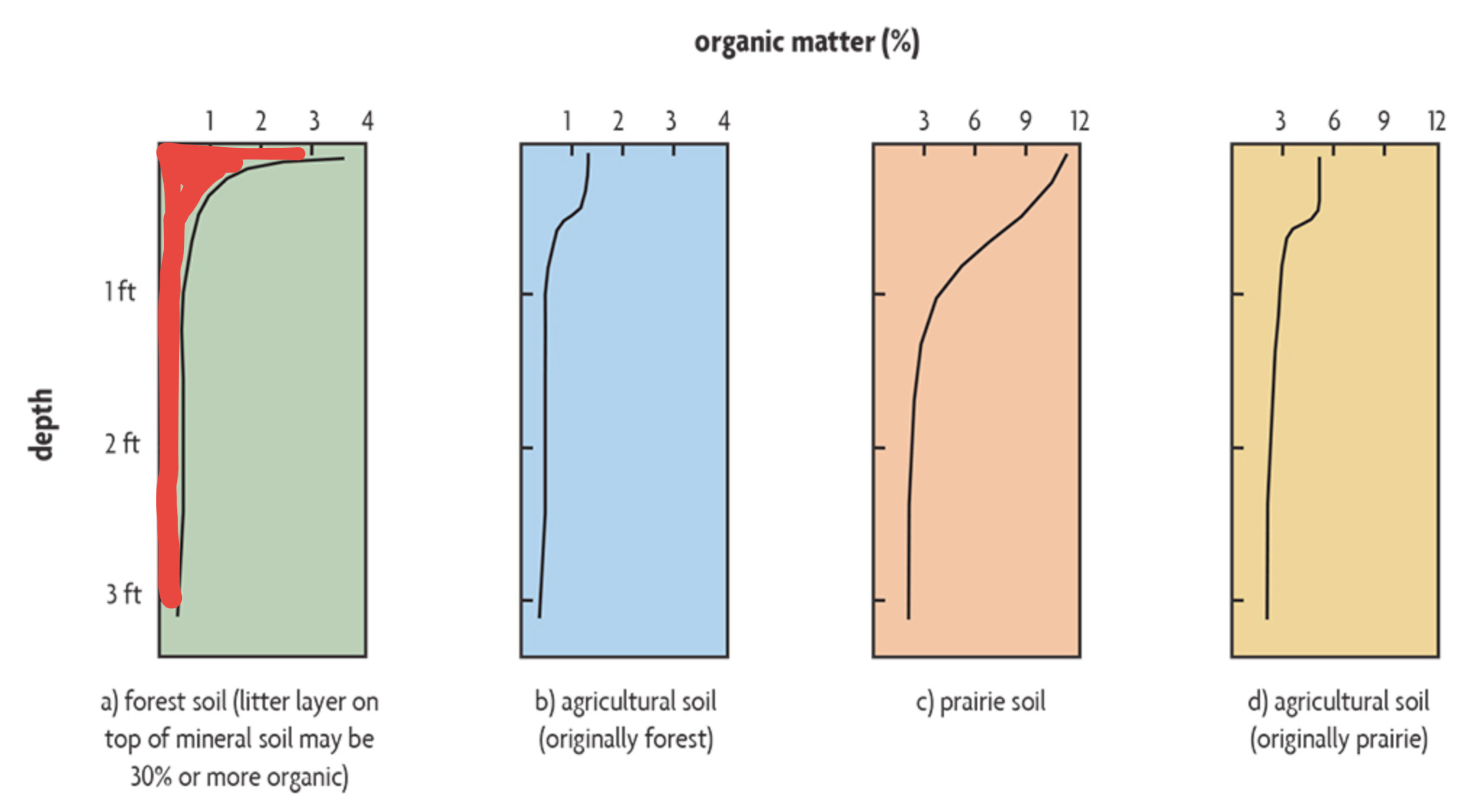
Most of the Canadian Shield is practically impossible to farm in. Glaciers during (the) Ice Age(s) scraped off most of the topsoil. Topsoil tends to be the richest in organic matter and is essential for agriculture. Topsoil also diminishes rapidly with depth.
Soil composition is critical to understanding the North.
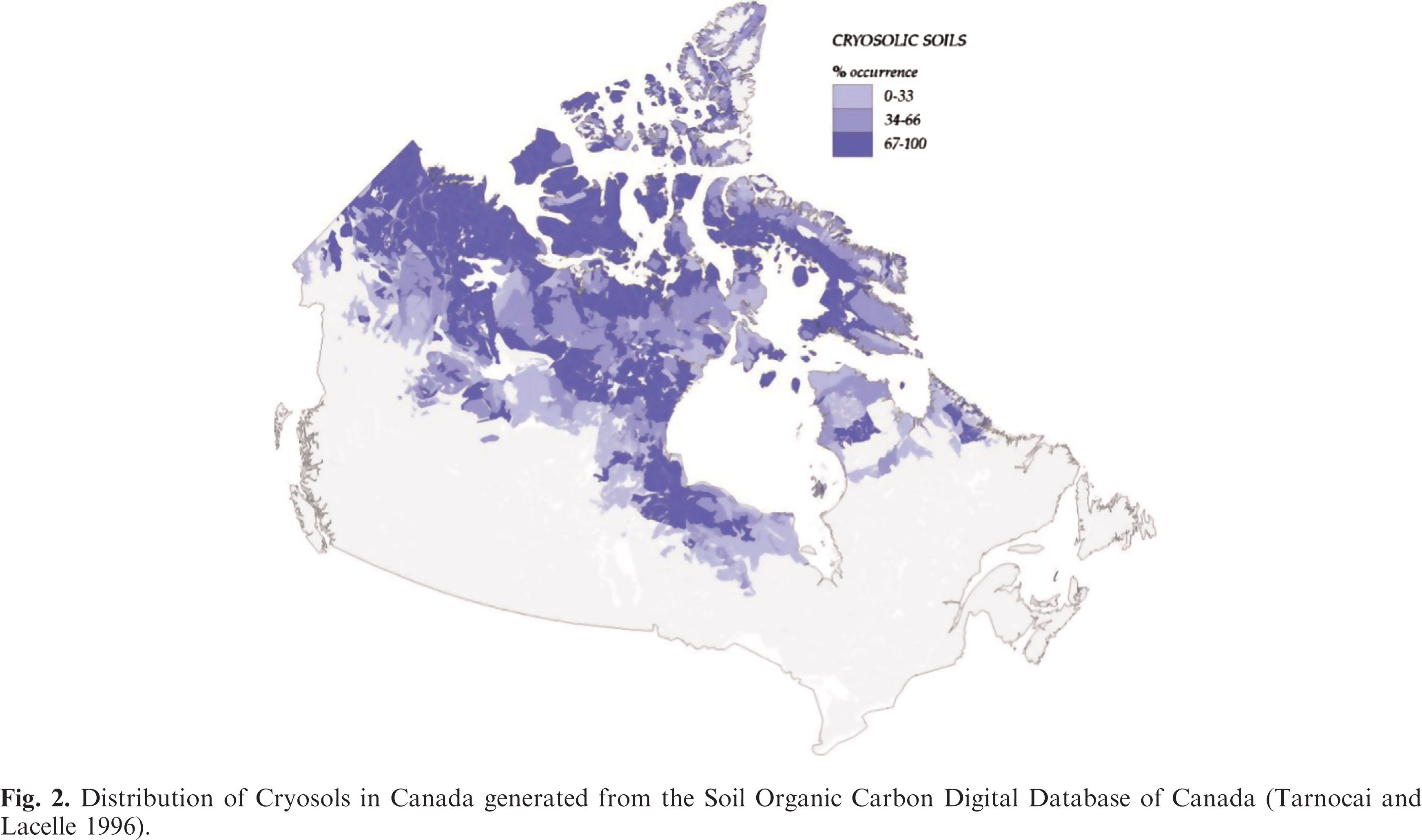
Most of the soil in Arctic Canada (35% of the country) is cryosolic. These are soils with a layer of permafrost (permanently frozen soil).
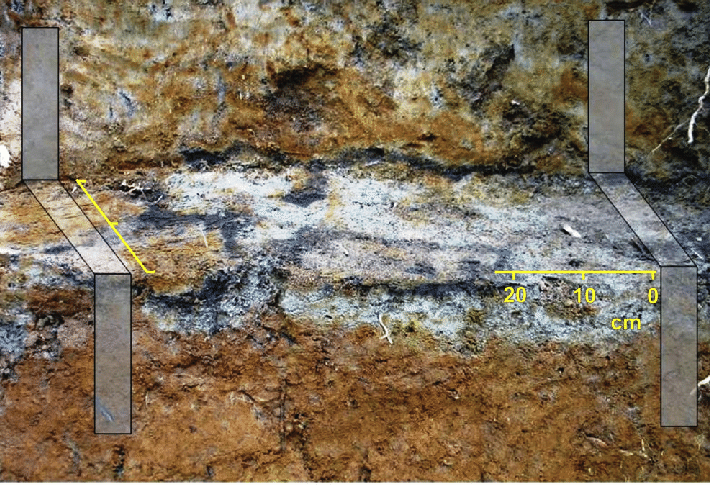
This permafrost layer is finicky. If you’re not careful, you end up with what’s called a thermokarst, a cavity of melted ice that is sometimes the size of a small lake.
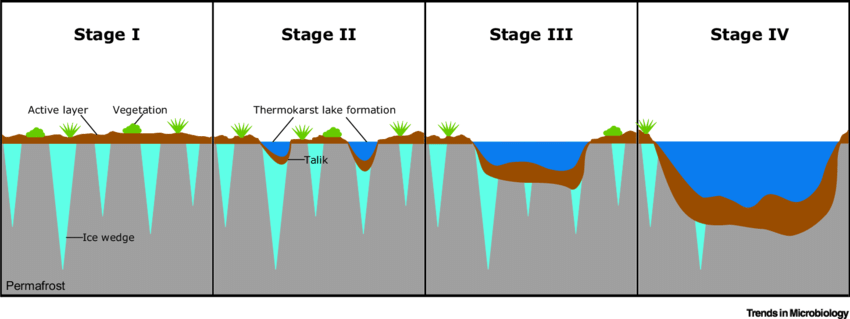
In my previous post, I boldly suggested that we terraform Northern Canada. In my mind, I implicitly had a model of soil layers that went roughly like this:
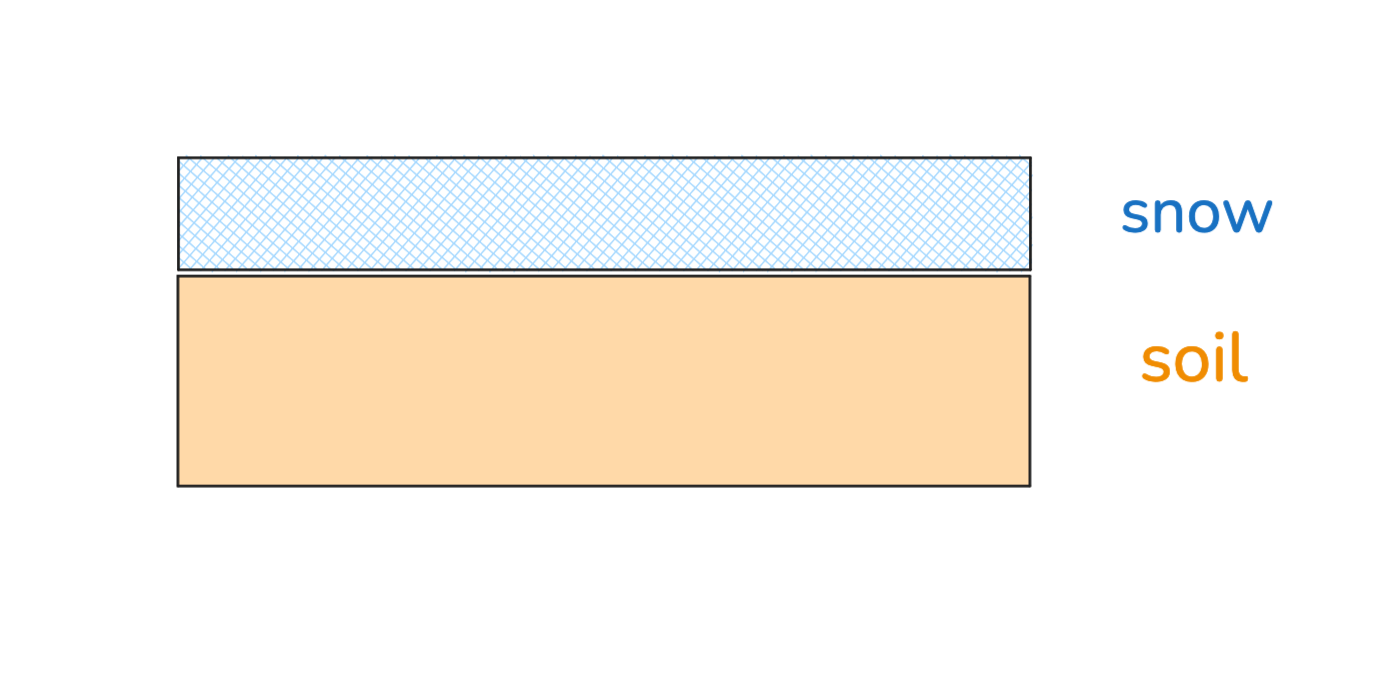
Per this model, it made sense to melt the snow at a large scale using solar reflectors, and end up with a foundation that’s easier to work with:

But learning how badly destabilizing permafrost is to the ecosystem made me realize how extraordinarily naive my original proposition was.
Current construction practices are built to work around the limitations of permafrost. Most groundwork for construction sites (pipelines, highways, the works) are conducted in winter, when the ground is frozen and unlikely to be perturbed.
Building on permafrost is hard (pun not intended). Not only is the ground inherently unstable, heat from buildings and pipes can also contribute to the thawing.
Infrastructure is already underdeveloped— and permafrost thawing combined with the already extreme weather makes complete collapse a real possibility.
This affects every form of infrastructure…
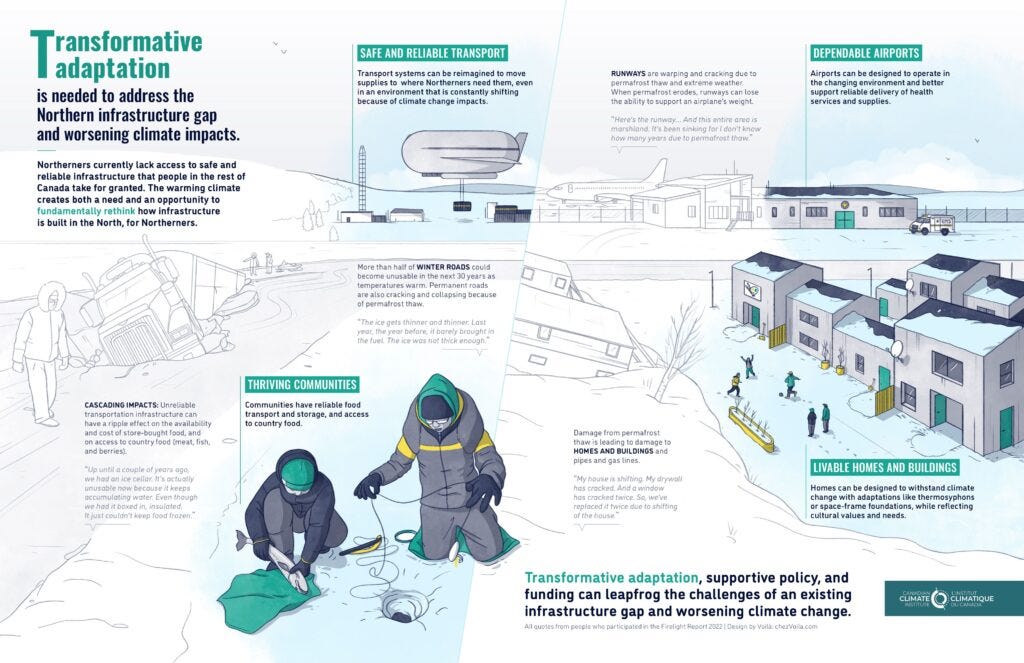
…From roads:
More than 50% of winter roads could be unusable by 2050.
…To buildings:
“mean, yeah, the biggest impact that permafrost thaw has had on me is probably my house shifting ... the foundation is still sound. But my drywall, especially around my windows, has cracked. And actually, a window on my north side of my house has cracked twice. So, we’ve replaced it twice —that’s how much it has moved.” — (C01, September 27, 2021)
As permafrost thaws in subarctic regions due to climate change, building and road infrastructure affecting 4 million people could experience widescale collapse by 2050.
We don’t want that to happen. Enter climate-resilient housing.
Civil Engineering
In Inuvik, NWT, buildings are elevated >1m above the ground (look closely in the photograph below). To create a layer of separation and drainage, wood piles and gravel pads are installed. HVAC and pipes are installed overground.
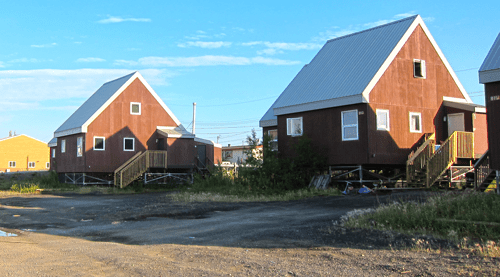
Piles are columns used to stabilize structures.
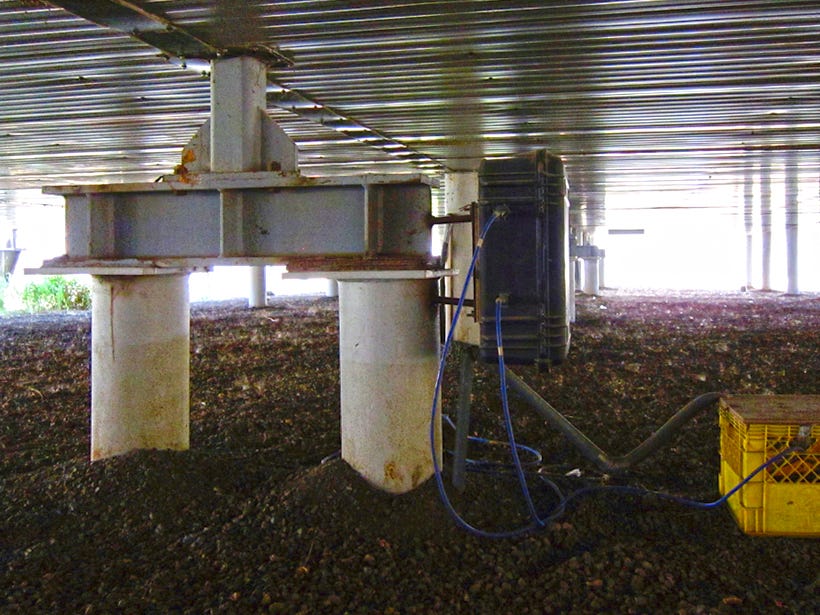
Piles are embedded in the permafrost layer for stability. By going deeper than the permafrost layer, the columns serve as a form of redundancy: some thawing can occur without damaging the building’s foundation.
The Cold Climate Housing Research Center (CCHRC) has a ton of reports on permafrost engineering. They are very cool, and deserve their own post to do justice. Guide for Permafrost Foundations (2023) is an overview of their research over the past few decades.
Earlier piles were often built with spruce timber - chosen for its low prices and high availability. But some of these houses are now being retrofitted with steel pilings, as the wood rots from frost exposure (even after treatment with preservatives). One area of active exploration is pile design. Arctic Foundations, a company out of Alaska, invented a passive-refrigeration technology for piles. The piles are filled with freon gas (a refrigeration). This requires an active source of energy, but much less digging — piles can be built at 32ft depth instead of 120ft.
Thermal Engineering
How can we maintain home temperatures so permafrost doesn’t thaw?
Two approaches:
Active cooling e.g. heat pumps
Passive cooling e.g. thermosyphons
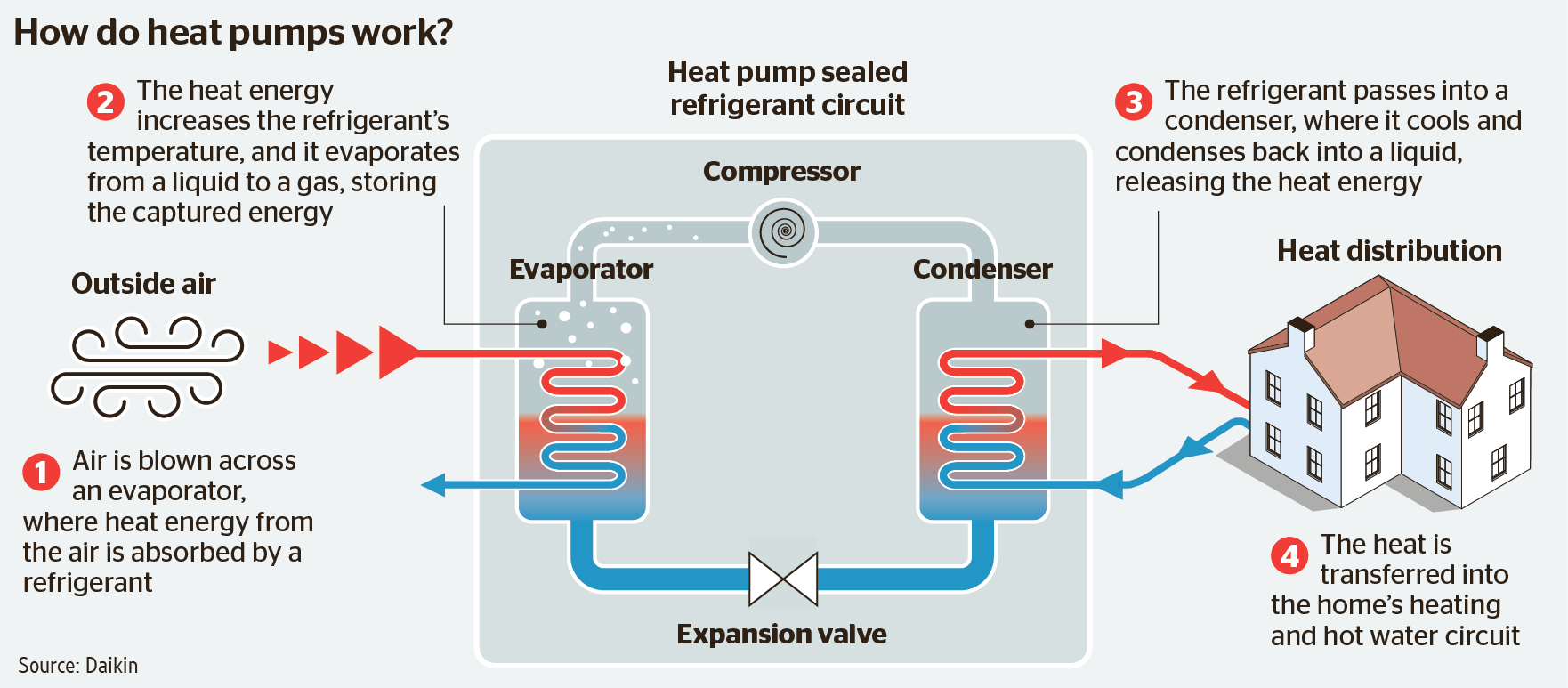
Heat pumps
Operation: circulating hot air from the ground, pressurizing it to a higher temperature, and then reusing it as heating for the house
Performance: really solid! the report was composed in 2000, 7 years after the heat pump installation in 1993, and found that the permafrost layer was still largely the same
Thermosyphons
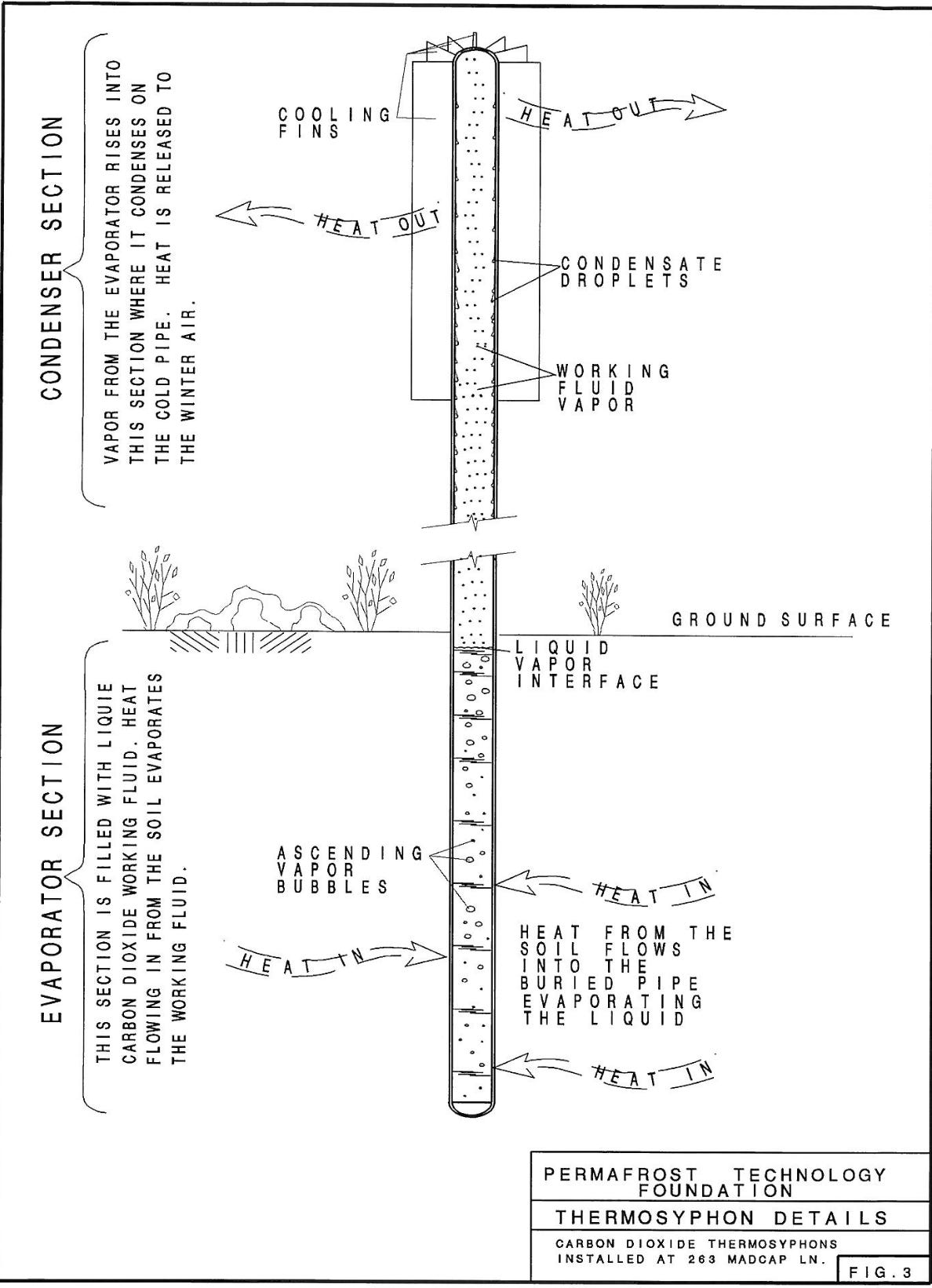
A thermosyphon is a pipe with no mechanical parts
Zero energy required to operate
One end of the pipe is placed below the ground (evaporator), another above (condenser)
The below-ground component is liquid CO2, while it’s vapor at the top
The liquid in the condenser absorbs heat from its surroundings, undergoes a phase change to vapor, and the lower density vapor rises to the evaporator layer, where the heat is dissipated. Thus heat is redirected away from the permafrost
Economics
We have the technology to build climate-resilient housing. But how far along these goals are we?
As the CIGI Institute’s Due North report contends we need:
Funding - the North is significantly underfunded
Information - better ways of monitoring progress of projects
Innovation - R&D to determine solutions tailored for the geology and climate
Regulation - policies and standards to ensure infrastructure is resilient
The federal government of Canada launched their Arctic Policy framework in 2019, and it reads like a well-intentioned plan that suffers from a lack of concrete implementation details.
State led funding isn’t enough. Canada as a whole faces an infrastructure deficit somewhere between $50 billion to $500 billion. Currently, Yukon, Northwest Territories, and Nunavut each receive north of $1 billion in federal transfers for core governmental expenses (social and health services for residents). These account for 70-80% of the province’s revenues.
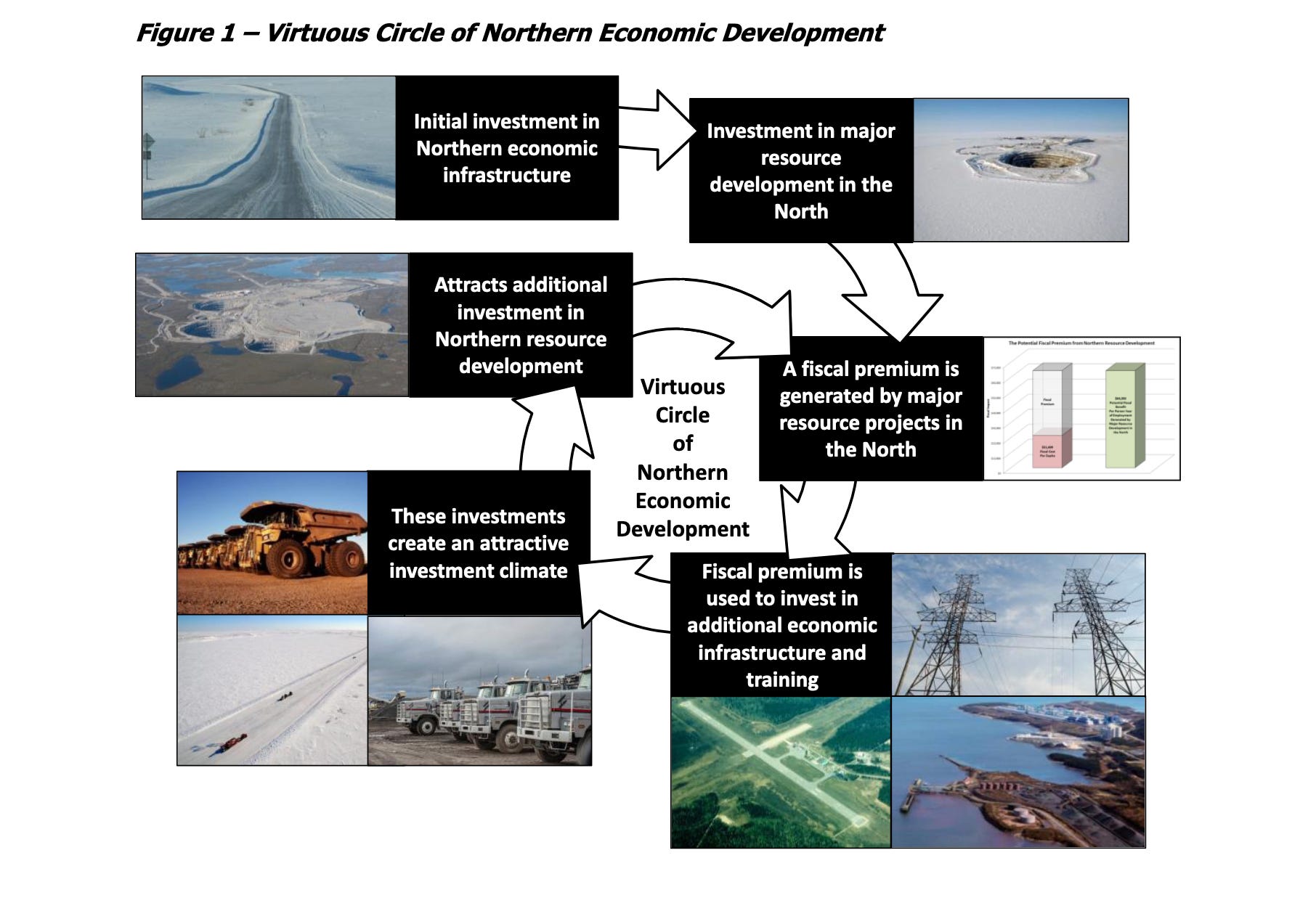
What we need is a self-sustainable flywheel — with upfront investment from a mix of private and state actors, and economic benefits for all residents and investors in the years to come.
Rocks
Canada has some of the world’s largest rare earth element (REE) reserves (~15.2 million tonnes of rare earth oxide).
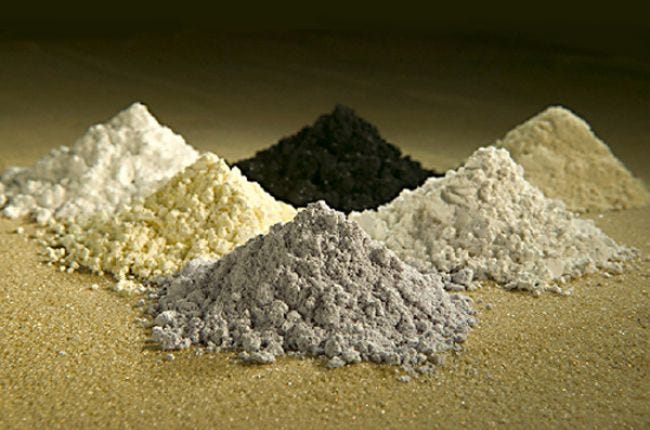
Now, why are REEs such a big deal?
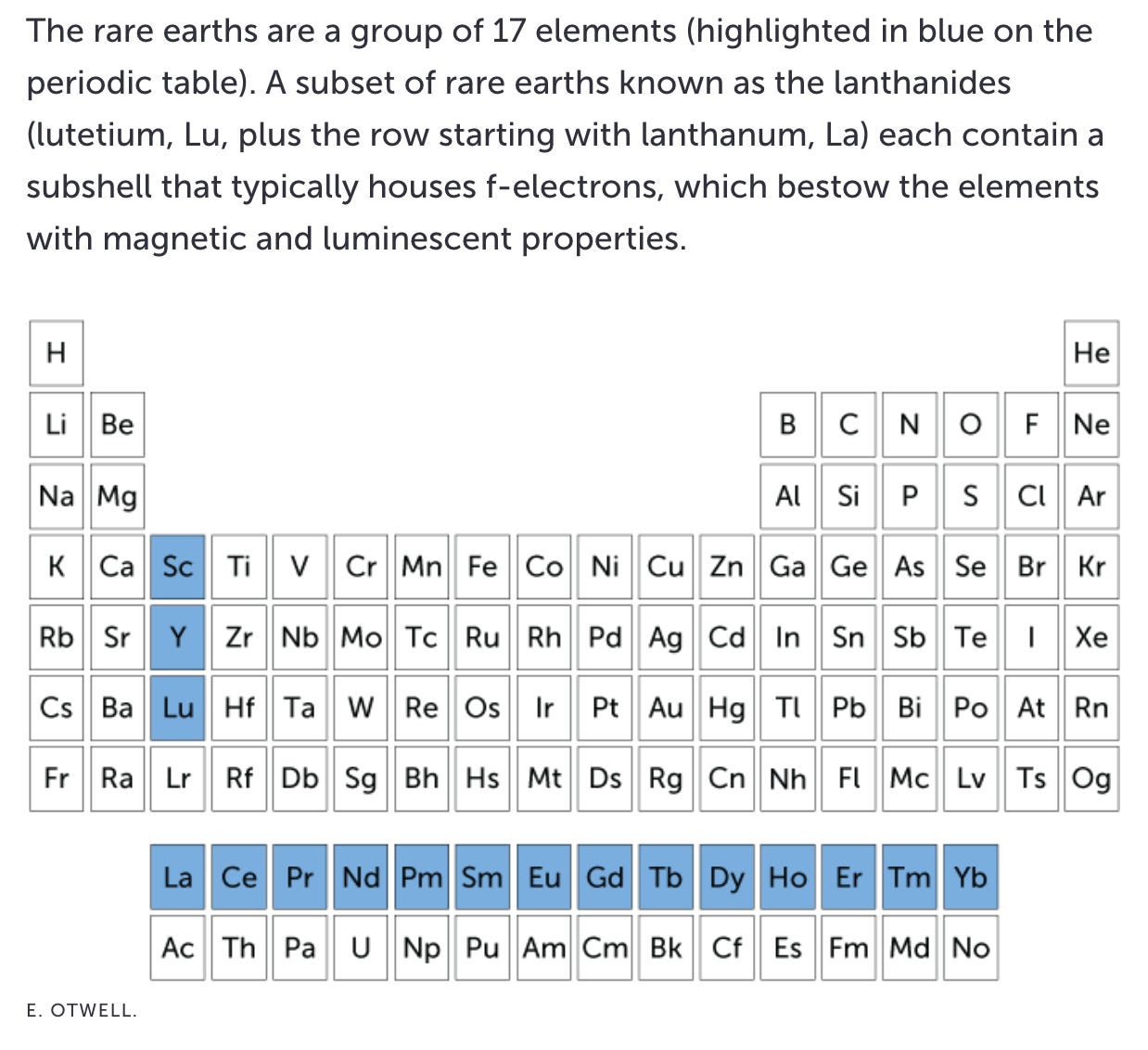
Electronics — smartphones, laptops, cameras — are dependent on these elements for their core functionality.
Here’s a non-exhaustive list of what makes them so cool:
Internet - Erbium has the same wavelength as light travelling in underwater fiber optic cables, and is used to enhance signals travelling thousands of miles
Smartphones - Neodymium can be used to make powerful miniaturized magnets, which are used for storage and audio in our pocket computers
Incredibly, Canada has zero production facilities for REE, instead shipping it off to offshore manufacturing giants such as China. China is the largest producer of rare earth elements by far, accounting for 70% of global production, with the United States, Australia, and Myanmar occupying the next few positions. For instance, Vital Metals is starting a facility in Nechalocho, Yellowknife. But Shenghe Resources purchased a ~10% stake and almost all of the current REE stockpile.
A 2015 study on mining costs in Canada found that building a mine in the North costs 2.5 times as much. Operational costs are also 30-60% higher.
In late 2022, Canada’s federal government released the self-descriptive Canadian Critical Minerals Strategy - offering $3 billion in incentives and tax breaks for investors and entrepreneurs.
This is huge untapped potential, and Canada and its geopolitical partners need to invest in local production and refinery capabilities to preserve their dominance.
Land
Investors are always on the lookout for alpha: how does 40% of the landmass of the 2nd largest country sound?
I recommend NAEDB’s report on the economic case for investment in the North.
The report estimates the direct employment benefits and tax revenue that would be generated by large scale transportation and energy projects, in the chart below:
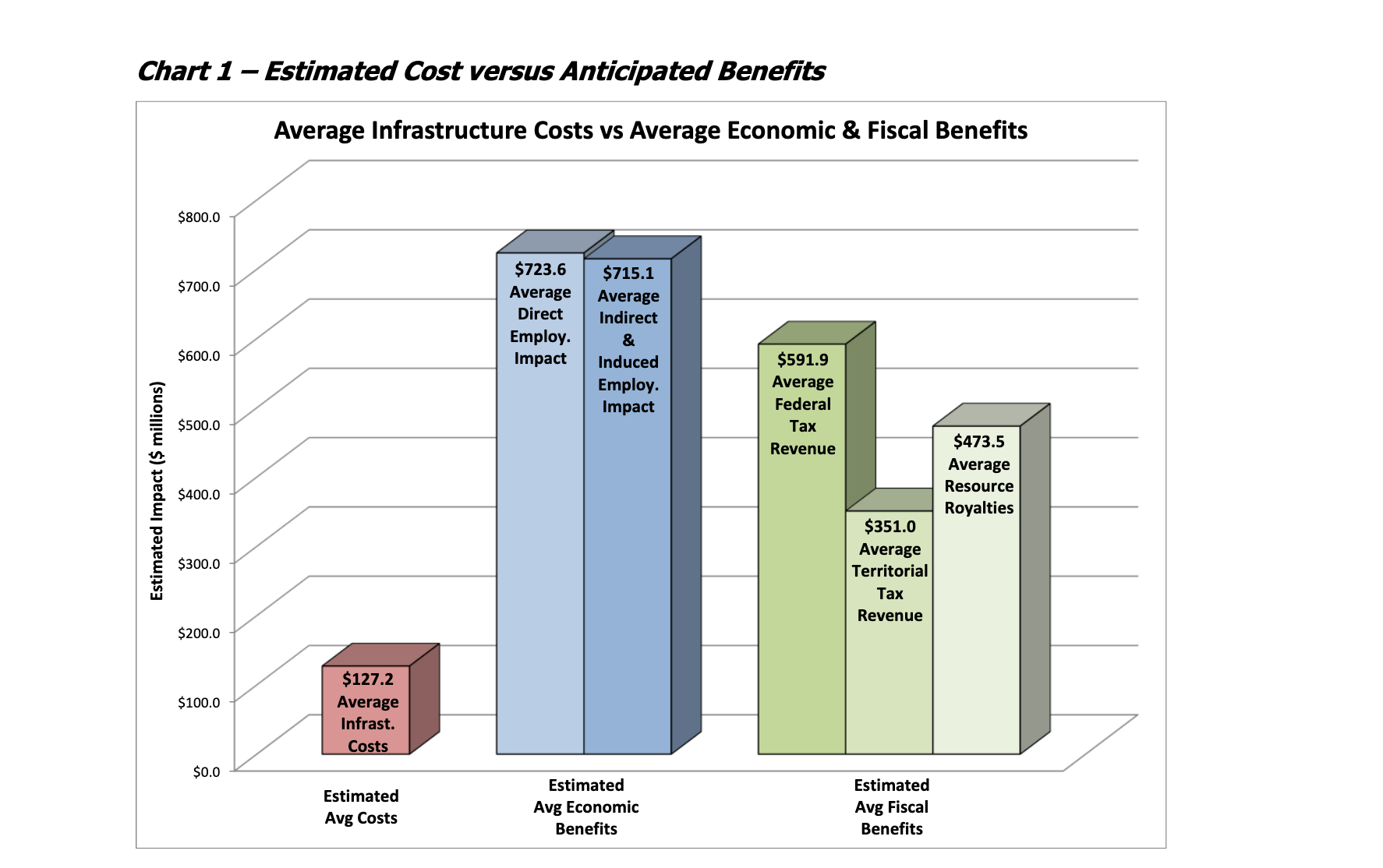
I haven’t actually looked at the nitty gritty of the report’s economic analyses (see Appendices here). But intuitively, large scale construction efforts are good for the economy — not just in enabling longer term projects and improving quality of life of residents, but by creating immediate job opportunities for inhabitants and encouraging more migrants.
The profits generated by the project can be used to invest in the province’s social services, as well as additional infrastructural investments.
This is the utopian vision:
But wait a second. Who owns the land in these territories?
29 land claim agreements cover most of the ground:
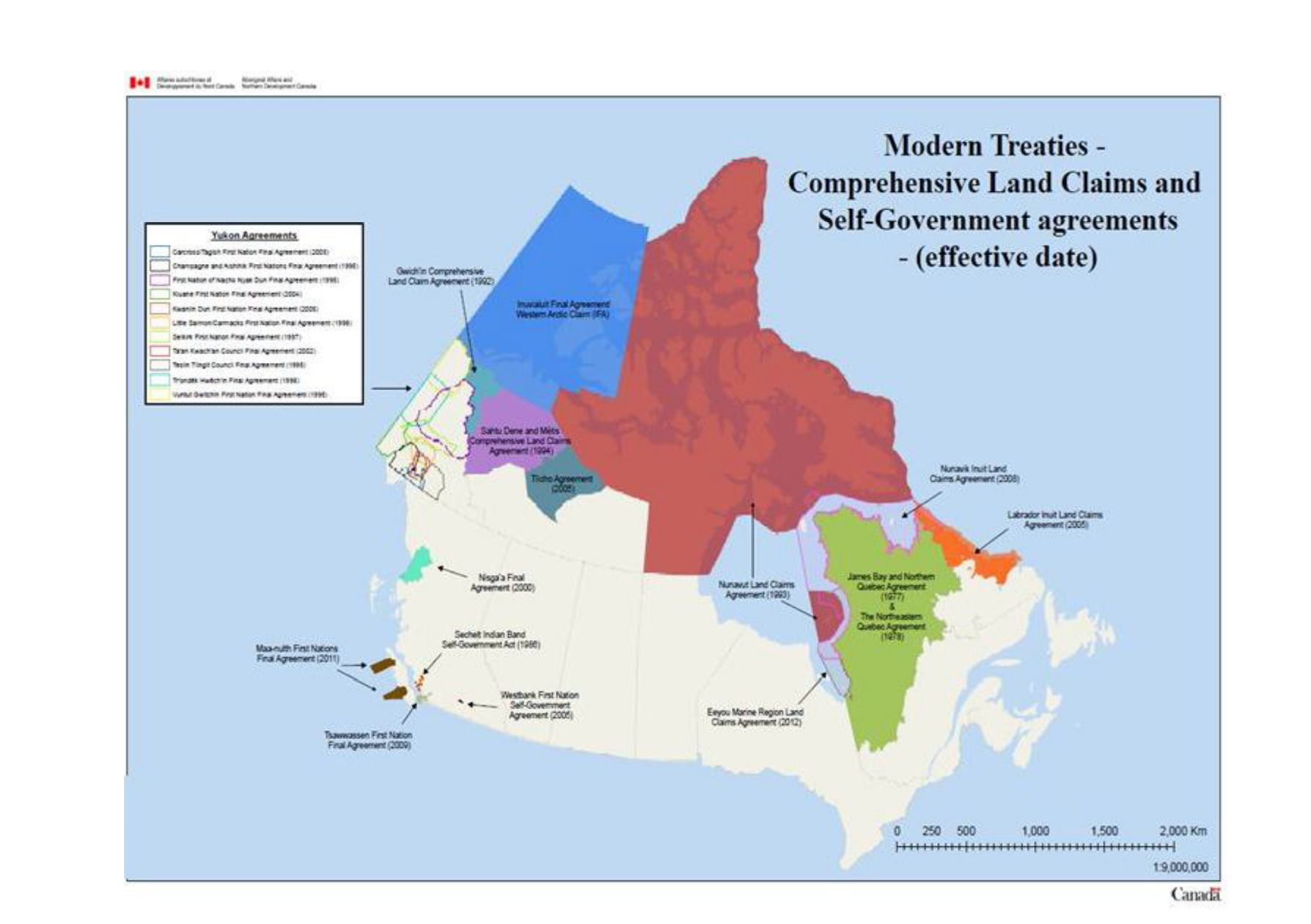
The assets are managed by indigenous development corporations.
For instance, the Makivik Corporation in northern Quebec is valued at $180 million with holdings across oil, fisheries, construction, transportation, real estate.
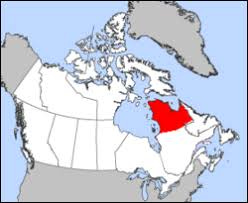
Investors looking to support the North should work with these local corporations as equity partners.
Make sure Indigenous interests are represented
Have local partners that help them navigate nuances
At a first glance, there is no straightforward way to terraform Canada’s North without deeply destabilizing existing ecosystems. That being said, it’s certainly an area that warrants further research. Climate-resilient infrastructure is one way of tackling climate change, but we need to invest in further research.
This is pretty open-ended, and could look like:
Robotics. Eg for precise construction and controlled steam thawing to prevent excessive ice melting during pile embedments. But that’s for a future post.
Copy Alaska: similar climatology, admittedly better geology. What technologies exist there? E.g. Arctic Foundations. Similarly, look at Russia, Northern Europe etc.
There needs to be massive infrastructural investment — in highways, roads, power, internet, supermarkets etc — for Northern Canada to be not just inhabitable but also desirable. But in principle, we do have the technology to do so. And once we do the legwork to set up infrastructure to create thousands of boring suburbs and industries, people will move there.
Let us terraform Canada. Ethically.
P.S. Shout out to Samia Tasmim, my favorite sister, for proofreading and editing.